

Factors Improving Machining Precision in CNC Sliding Head Lathes
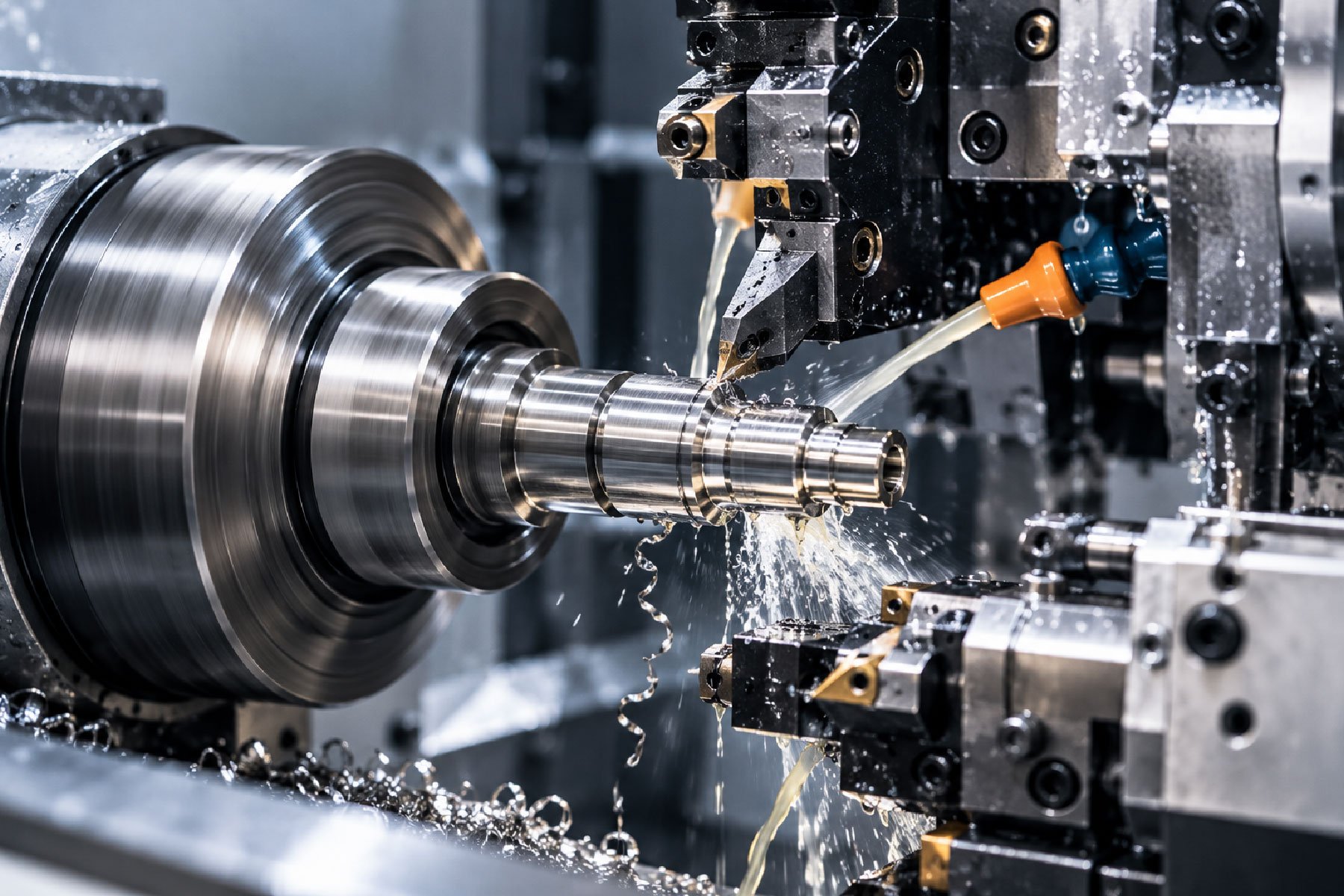
❝Explore the key elements affecting machining precision and factors increasing efficiency in CNC sliding head lathes.
In the precision machining industry, high accuracy is one of the most critical criteria for success, especially in the mass production of complex and small-diameter components. CNC sliding head automatic lathe technology is among the specialized systems developed to achieve this high degree of accuracy. It offers far superior tolerance control compared to conventional turning machines, particularly for parts where the length-to-diameter ratio is high. Maintaining the desired quality and dimensional precision throughout production processes requires the meticulous management of multiple components and variables.
Guide Bushing and Material Compatibility
At the core of the operating principle of CNC sliding head lathes is the guide bushing. Through this bushing, the material is supported very close to the cutting point. This close support minimizes vibrations and deflections that may occur during the machining of slender parts. The compatibility between the guide bushing and the surface quality and diameter tolerance of the processed material is of great importance in maintaining precision.
The movement tolerance of the material within the bushing directly affects the surface roughness and dimensional accuracy of the final part. Therefore, keeping diameter deviations to a minimum during raw material selection is an indispensable factor for the continuity of machining precision.
Cutting Tool Selection and Cutting Parameters
Another factor that has a direct impact on machining precision is cutting tools. The correct tool geometry and coating selection keep cutting forces balanced, preventing the workpiece from deforming. Especially in long-term mass production, early detection of tool wear and timely intervention are essential.
- Optimizing cutting speeds and feed rates according to the properties of the machined material,
- Choosing vibration-damping tool holders,
- Regularly monitoring and controlling tool wear.
Each of these parameters directly contributes to the stable operation of the machine and the preservation of tolerances at the micron level.
Machine Thermal Stability and Environmental Conditions
One of the factors frequently overlooked in precision manufacturing yet profoundly affecting the results is thermal stability. CNC sliding head lathes heat up during long-term operations. The degree to which the machine body and components are affected by temperature changes directly limits dimensional stability.
Keeping temperature fluctuations in the working environment under control helps maintain the thermal balance of the machine. Temperature regulation in the production area prevents dimensional deviations, especially in projects where tight tolerance ranges are critical.
Coolant Management and Chip Evacuation
Effective coolant management both extends cutting tool life and preserves machining precision. The heat generated in the cutting zone must be rapidly removed with coolant possessing the correct pressure and flow rate. At the same time, the safe evacuation of chips from the cutting zone prevents surface defects and tool breakage caused by chip jamming.
The continuity of chip evacuation ensures a stable production process, particularly in tight-tolerance drilling and grooving operations.
The Role of Regular Maintenance and Calibration
Even state-of-the-art CNC sliding head lathes can experience losses in precision over time if regular maintenance and calibration are not performed. Periodic inspection of axis ball screws, guideways, and spindle bearings prevents mechanical backlash and wear.
Periodic geometric checks and axis calibrations support the machine in operating at its initial precision level. This approach reduces scrap rates and increases overall process efficiency.